

A same-day crown after root canal therapy may be possible when treatment is complete and the tooth is ready for its final restoration. The decision depends on the tooth’s remaining structure, the surrounding tissues, the bite, and the time needed for the appointment.
Sometimes, a dentist can finish root canal treatment and place the crown during the same visit. Other cases need separate appointments. A root canal that takes more than one visit does not automatically rule out a same-day crown once treatment is finished.
Understanding these differences can help you plan your care and know what to ask before scheduling treatment.
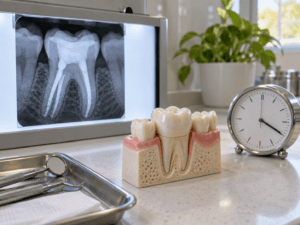
What Does a Same-Day Crown Mean?
A same-day crown is a permanent restoration designed, made, and placed during one crown appointment. Pendleton Smiles uses CEREC technology to provide same-day dental crowns.
The dentist scans the prepared tooth, designs the crown digitally, and uses an in-office unit to mill it from ceramic. The crown is then checked for fit and bite before placement.
The term describes the crown appointment. It does not mean that every treatment needed before the crown will also happen during that visit. Your root canal may take one or more appointments, and the tooth may need additional work before the permanent crown can be placed.
For example, you might finish the root canal at one appointment and return later for a crown that is made and placed that day. If the tooth is ready and enough time is reserved, the final root canal visit and crown appointment may instead be coordinated.
Why a Crown May Be Recommended After a Root Canal
Root canal therapy treats inflamed or infected tissue inside the tooth. The canals are cleaned, filled, and sealed. The tooth is then restored with a crown or filling to help protect it and restore its function.
A crown may be recommended because the tooth has lost structure from decay, a crack, an injury, a large filling, or the opening needed for treatment. The recommendation is based on what remains and how the tooth handles biting forces.
Molars and premolars often need coverage because they do much of the chewing. Some front teeth with a smaller treatment opening and enough healthy structure may be restored with a filling instead.
The choice is individual. Pendleton Smiles provides restorative dentistry options that can be considered according to the tooth’s condition and the patient’s needs.
What Determines Whether the Tooth Is Ready?
Having the equipment to make a crown is only part of the decision. Your dentist also checks whether the root canal is complete and whether the tooth can support a suitable restoration.
Root Canal Treatment Is Complete
The canals must be cleaned, filled, and sealed before the final restoration is placed. This may happen during one visit or after several visits.
Complex canal anatomy, ongoing drainage, retreatment, or another concern may require additional treatment. If the root canal is unfinished, the dentist may use a temporary filling between appointments.
Mild tenderness can occur after treatment. Your dentist will assess whether symptoms are expected or need further evaluation rather than using a single rule for every patient.
Enough Healthy Tooth Structure Remains
A crown needs a stable foundation. The dentist evaluates the amount of healthy tooth remaining and whether damage extends into areas that are difficult to restore.
A deep crack, decay below the gumline, root damage, or problems with the supporting tissues may change the plan. Additional imaging or a specialist evaluation may be appropriate if the extent of the damage is unclear.
Any Necessary Buildup Can Be Completed
When part of the tooth is missing, the dentist may place a core buildup. This replaces missing structure and creates a foundation for the crown.
Some teeth need a post to help retain the buildup when little natural structure remains. A post is not required after every root canal. Its main role is to hold the buildup in place. Whether a post is suitable depends on the individual tooth.
A buildup or post cannot make every damaged tooth suitable for a crown. The dentist still needs to assess the remaining structure and how well the planned restoration can be supported. If that foundation is uncertain, the next step may be further evaluation rather than immediate crown placement.
The Tooth Can Be Scanned and Kept Dry
The dentist needs a clear scan of the prepared tooth and its edges. Bleeding, swelling, or damage extending below the gumline can make scanning and placement more difficult.
If those conditions interfere with an accurate restoration, the dentist may need to address them before completing the crown. Waiting alone may not resolve a problem with the remaining tooth structure.
The Crown Can Work With Your Bite
Tooth location, grinding, clenching, and the available space affect crown planning. The crown must fit the prepared tooth and work with the nearby and opposing teeth.
Your dentist may adjust the design or recommend ways to manage biting forces based on the examination.
The Appointment Can Accommodate Each Step
A root canal, buildup, crown preparation, scan, milling, and placement require time. Even when the tooth is ready, separate appointments may be needed so each step can be completed properly.
If an endodontist performs the root canal, the general dentist may coordinate the restoration afterward. Seeing another provider affects planning; it does not automatically mean the tooth cannot receive a same-day crown.
How the Crown Appointment Works
Once the tooth is ready, the crown appointment generally includes:
- Evaluation and preparation: The dentist reviews the tooth and bite, completes a buildup if needed, and shapes the tooth for the crown.
- Scanning and design: A digital scan records the prepared tooth and bite so the restoration can be designed.
- Milling: An in-office unit creates the ceramic crown.
- Fit and placement: The dentist checks the contacts, appearance, and bite before securing the crown.
Pendleton Smiles’ CEREC technology allows this crown process to be completed in one visit when the tooth and treatment plan are suitable.
How Soon Should the Final Restoration Be Placed?
The goal is to restore the tooth promptly once your dentist considers it ready. The American Dental Association describes using a temporary filling to protect the tooth until a permanent filling or crown can be placed.
There is no single waiting period that fits every case. A later appointment may reflect additional treatment, reassessment, or scheduling rather than an unsuccessful root canal.
Follow the timeline your dentist recommends. A temporary restoration is not intended to replace the final crown or filling indefinitely. If you cannot attend the planned appointment, contact the office to discuss how the tooth should be protected while you arrange follow-up care.
Protecting the Tooth Between Appointments
Follow your dentist’s instructions while waiting for the final restoration. General precautions include:
- Avoid biting heavily or chewing hard or sticky foods on the treated tooth.
- Wait until numbness wears off before eating.
- Brush and floss gently around the treated area.
- Keep your follow-up appointment.
- Contact the dentist if your bite feels uneven, symptoms worsen, or the temporary restoration loosens or comes out.
Request prompt emergency dental care for severe or worsening pain or visible swelling. If swelling causes difficulty breathing or swallowing, seek emergency medical care immediately.
Frequently Asked Questions
Is a CEREC Crown Temporary?
No. A CEREC crown is intended to be the final restoration. Although it is made during the appointment, it still requires proper fit, bite evaluation, and ongoing care. Its performance depends on the tooth, material, bite, hygiene, and other individual factors.
What If My Temporary Filling Comes Out?
Contact your dentist promptly, even if the tooth does not hurt. The tooth may need to be examined and resealed while you wait for its final restoration. Avoid chewing on the affected tooth until you receive instructions.
Does Delaying the Crown Mean the Root Canal Failed?
Not necessarily. Additional steps or appointment coordination can affect timing. However, pain, swelling, or returning symptoms need assessment. Follow your dentist’s plan rather than assuming either that a delay is harmless or that treatment was unsuccessful.
What Should I Ask When Scheduling Treatment?
Ask whether the root canal is expected to be complete at that visit, whether the tooth needs a buildup, and how much time is needed for the crown. If another provider is involved, ask how the records and restoration appointment will be coordinated.
Plan Your Restoration at Pendleton Smiles
A same-day crown after root canal therapy can be an option when treatment is complete and the tooth is ready. The appointment plan should reflect the tooth’s condition, any additional restorative steps, and the time needed for careful treatment.
If you need care for a damaged or infected tooth in Pendleton, IN, contact Pendleton Smiles to schedule an evaluation. The team can explain your options and help you understand the recommended timing for root canal therapy and crown placement.


